Reusing aluminum offcuts: interview with a SIB operator
SIB, a subsidiary of the Nadia Group, manufactures aluminum gates, fences, shutters and garage doors in Mortagne-sur-Sèvre, France. With nearly 800 tonnes of profiles consumed every year and an offcut rate of more than 20%, scrap management had become a major issue. Its Industrial Director looks back on choosing the Material Management System (MMS) from Reeverse Systems, the results achieved in one year, and how the shop-floor teams adopted the tool.
Why did you choose Reeverse Systems to reduce your scrap rate?
We had been trying to optimize our scrap rate for several years, on both profiles and panels. We had already explored several options, but the solutions we tested often turned out to be too complex or not transparent enough about the real gains.
When we met Reeverse Systems, the difference was immediate: their approach was concrete, the simulations were easy to understand and the results were quickly measurable.
In 2024, our annual consumption of aluminum profiles exceeded 800 tonnes. Every point gained means both material savings and a significant cost reduction.
What did you expect from a scrap management solution?
Above all, we were looking for a solution that was simple to understand and transparent in how it works. We had been in contact with other companies offering “black box” models, where it was hard to see how the gains were generated.
With Reeverse Systems, this transparency allowed us to quickly dispel our doubts and commit with full confidence.
Integration with our ERP and our flow management systems was also a concern, but Reeverse Systems took the time to explain how the solution would integrate easily with our existing tools, without disrupting our organization. That made a real difference.
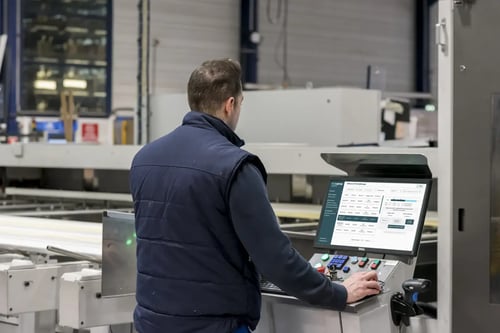
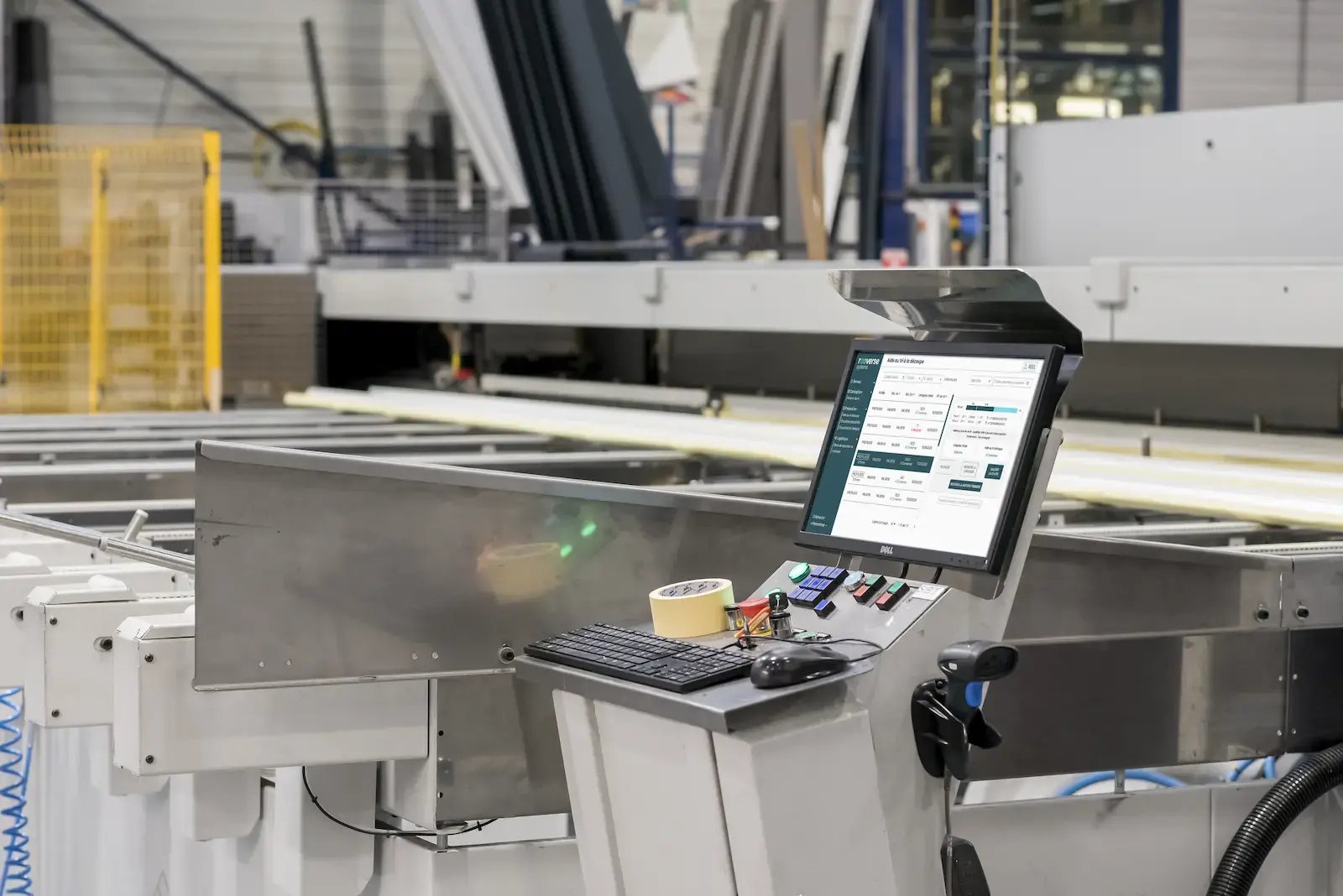
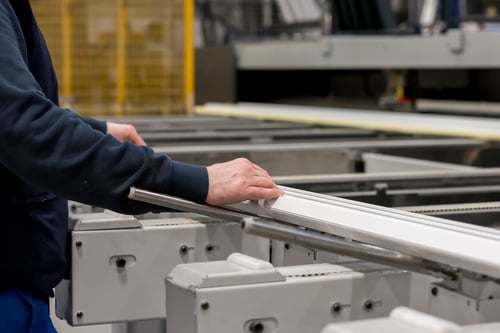
The control station of an aluminum profile cutting line at SIB's plant in Mortagne-sur-Sèvre (Vendée, France). Photo taken by Reeverse Systems.
What results have you seen since implementing the MMS?

6 pts
reduction in scrap rate

36 tonnes
of aluminum saved

152 tonnes
CO₂ eq. avoided
The first benefits were visible quickly. We got better at identifying and making use of our scrap, significantly reducing losses and optimizing our resources. In 2025, our first year using the MMS, we reduced our scrap rate by 6 points and saved 36 tonnes of aluminum. In 2024, the rate stood at 20%.
The environmental impact is significant: 152 tonnes of CO₂ equivalent avoided. We have set up a genuine, measurable and sustainable reuse process, which strengthens our commitment to the circular economy. It is a real competitive lever in the face of new market requirements.
How much material could your plant save?
Measure your real scrap rate from a single cutting file, with no commitment.
No commitment
Results in 2 weeks
Reply within 48 hours
How did your teams adopt the tool?
One of the key points for us was that the solution should be easy for our teams to adopt. We involved our production managers and shop-floor teams from the start so that they could understand the added value of the solution, the Material Management System (MMS).
The ergonomics and ease of use of the tool meant that it was adopted quickly. We also benefited from strong support from the Reeverse Systems teams, who provided on-site follow-up and training tailored to the needs of our operators.
Scrap management has become an optimization opportunity. It is a genuine cultural shift.